The Ethiopian coffee ceremony — known as Buna — is one of the most important cultural traditions in Ethiopia. It's not a quick cup of coffee. It's a ritual. A gathering. A way of saying: sit down, slow down, and connect.
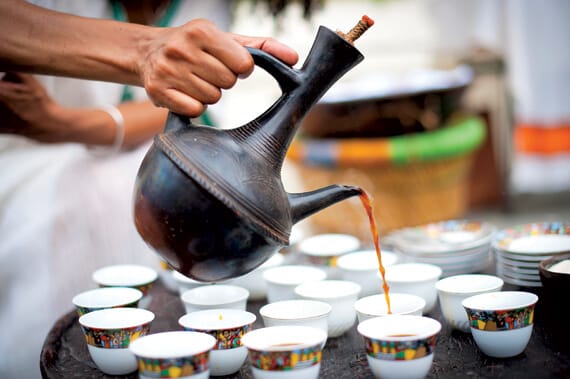
At Injera & Beyond in Cedar Park, we bring this tradition to your table. From roasting the raw green beans over an open flame to pouring the finished brew from a hand-crafted jebena clay pot, every step is done with intention — the same way it's been done for centuries.
"Coffee was discovered in Ethiopia over a thousand years ago. Every cup we pour is a tribute to that legacy."
Why Ethiopian Coffee Is Different
Ethiopia is the birthplace of coffee. The coffee plant (Coffea arabica) originated in the Kaffa region of southwestern Ethiopia, where it grew wild in the highland forests. Ethiopian farmers have been cultivating and trading coffee for over a thousand years — long before it spread to the rest of the world.
What makes Ethiopian coffee distinct is the bean itself. Ethiopian arabica varieties are naturally fruity, floral, and complex in ways that most commercial coffees aren't. When roasted fresh and brewed in a jebena without paper filters, the full character of the bean comes through — bright, aromatic, and layered.
How the Ceremony Works
A traditional Ethiopian coffee ceremony has three distinct rounds — each with its own meaning. The first round (Abol) is the strongest and most aromatic. The second (Tona) is slightly lighter. The third (Baraka), meaning "blessing," is the mildest — and to receive all three is considered a great honor.
At Injera & Beyond
We roast and grind our beans in-house using Ethiopian arabica sourced directly. Our coffee is served in the traditional sini cups alongside our full menu — or on its own as a standalone experience after your meal.
A pot of Ethiopian coffee serves under 5 people and is available for $25 / pot or $4.99 / cup. It pairs beautifully with our Abyssinian Affogato (espresso over vanilla gelato) or our Baklava — a combination worth trying.
📞 Call ahead to arrange your ceremony. Please give us a call at (512) 522-0920 so we can have everything ready for you.
Whether you're ending a long meal or just stopping in for coffee, this is a moment worth slowing down for. We're open Tuesday through Sunday in Cedar Park — and we'd love to share this tradition with you.
Come Experience It
Reserve your table at Injera & Beyond and end your meal with the authentic Ethiopian coffee ceremony — the only one in Cedar Park.